How Dry Ice Blasting Helps Restore Buildings After Fire Damage
When a fire happens in a home or commercial building, the visible damage is only part of the
problem. Long after the flames are gone, soot, smoke residue, and carbon contamination
remain on structural surfaces. These materials can continue to cause damage if they are not
properly removed before rebuilding begins.
This is where Dry Ice Blasting plays a critical role in the restoration process.
What happens after a fire
Fire damage affects more than just walls and ceilings. Smoke travels through a building and
leaves behind a fine layer of residue that can settle into wood, concrete, steel, and hidden
cavities. This residue is often oily, acidic, and difficult to remove with standard cleaning methods.
If left untreated, it can lead to lingering odours, surface deterioration, and problems with new
finishes or coatings later on.
Why traditional cleaning methods can fall short
Conventional cleaning after fire damage often involves water washing, scrubbing, or chemical
treatments. While these methods can remove some surface staining, they can also introduce
new challenges.
Water based cleaning can add unwanted moisture into building materials, which may slow down
the drying process and complicate reconstruction timelines. Chemical cleaners can require
additional rinsing and disposal steps, which adds time and complexity to the job.
In many fire restoration projects, efficiency and control are essential because rebuilding cannot
move forward until surfaces are properly prepared.
How Dry Ice Blasting works
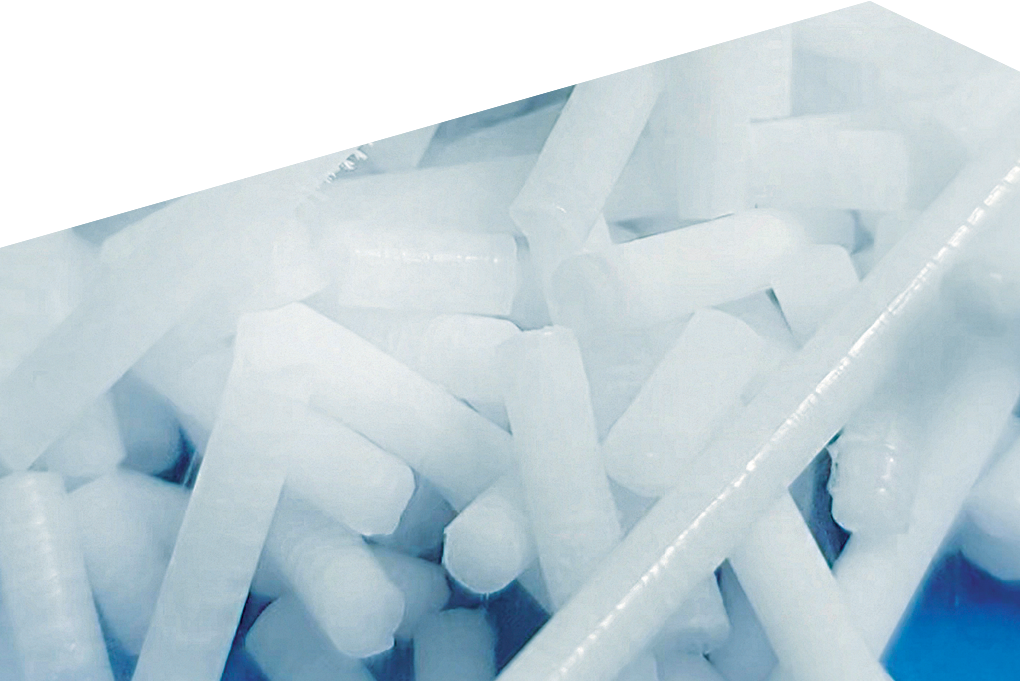
Dry Ice Blasting uses compressed air to accelerate small pellets of dry ice at high speed toward
contaminated surfaces. When the pellets make contact, they lift and break down soot and
residue without damaging the underlying material.
The dry ice then naturally disappears as it returns to gas form, which means there is no
secondary blasting media left behind and no additional cleanup from the cleaning process itself.
This makes it especially effective for fire restoration work where contamination needs to be
removed from a wide range of surfaces, including hard to reach structural areas.
Key benefits for fire restoration projects
Dry Ice Blasting offers several advantages during fire cleanup and restoration work.
It does not introduce moisture into the structure, which helps reduce delays caused by drying
time. It also avoids the use of harsh chemicals, making it a cleaner and more controlled process.
Because there is minimal secondary waste, crews can focus more on restoration rather than
cleanup of the cleaning process itself. This helps speed up the transition from damage mitigation
to rebuilding.
It is also effective in detailed or complex areas where soot and residue can be difficult to access
with traditional methods.
Real project example from Trenton
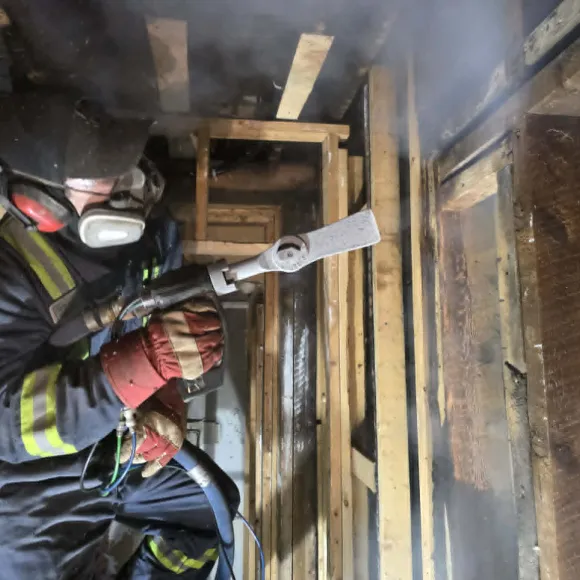
In a recent fire restoration project in Trenton, Dry Ice Blasting was used to remove soot, smoke
damage, and carbon buildup from structural surfaces inside a damaged home.
The goal was to prepare the structure for sealing and reconstruction work. By removing
contamination at the surface level without introducing water, the space could move forward in
the restoration process more efficiently.
This type of work is a strong example of how proper cleaning techniques can directly impact
rebuild timelines and overall project success.
Why this matters
Fire restoration is not just about cleaning what can be seen. It is about preparing a structure so
it can safely and effectively be rebuilt. The quality of the cleaning process directly affects
everything that comes after it.
Dry Ice Blasting provides a precise and efficient way to remove contamination while protecting
the integrity of the underlying structure.
For contractors, property owners, and restoration teams, this means faster progress, cleaner
surfaces, and a more reliable starting point for rebuilding.