There is a
BETTER, FASTER, SAFER WAY
to clean your Industrial Equipment & Machinery
Call Us 905-396-4151
Get Directions 40 Spencer St #1, Colborne
Experts in dry ice production & blasting • Fresh, bulk dry ice on demand, Ontario-wide
News
When people hear “dry ice blasting,” they might picture one machine, one type of dry ice and one standard cleaning process.
In reality, there is more to it.
The size and type of dry ice used can have an impact on how a job is approached, particularly when you’re dealing with different surfaces, equipment and types of contamination.
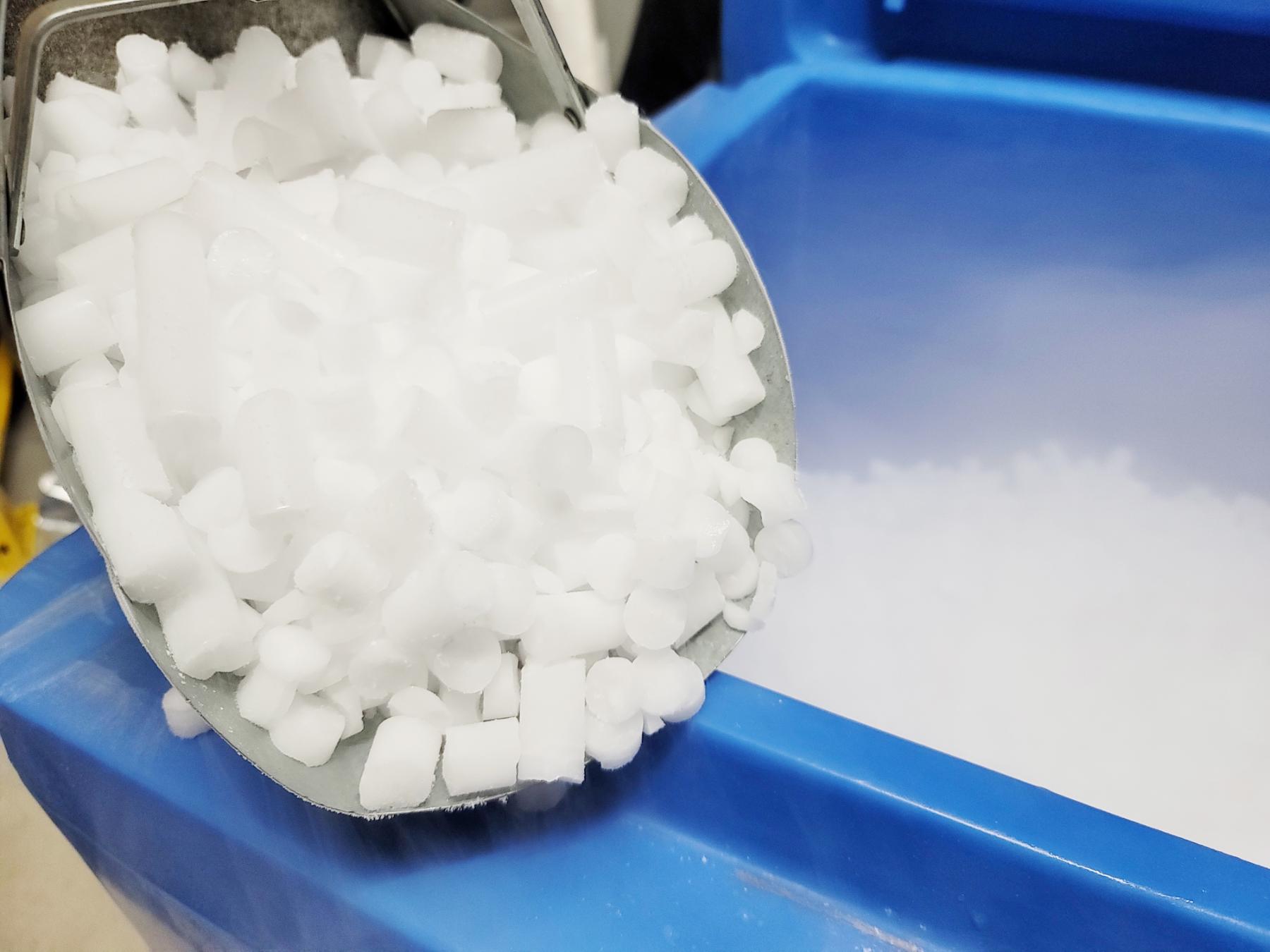
At Dry Ice Solutions, both pellets and larger dry ice nuggets are available, giving operators more flexibility when determining the right approach for the job.
The basic principle is the same. Dry ice particles are accelerated through a blasting system using compressed air. When they hit the contaminated surface, the combination of impact and thermal shock helps break the material away. The dry ice then sublimates into a gas.
The difference comes down largely to the size of the dry ice particles.
Pellets are smaller and provide a more controlled blasting option.
They can be useful when working around detailed components, tighter areas or surfaces where a more precise approach is needed. Their smaller size allows operators to adjust the cleaning process to suit the application rather than relying on the same level of impact for every job.
Larger nuggets provide more mass behind each individual particle.
That can make them useful when dealing with heavier buildup or more stubborn contamination where additional impact is beneficial. For industrial equipment with significant grease, carbon, residue or other buildup, larger particles can be part of an effective cleaning approach.
It might seem logical that larger particles would simply be the better choice for difficult jobs, but dry ice blasting isn’t quite that simple.
The best setup depends on what you’re cleaning, what you’re trying to remove and how delicate the underlying surface is.
Pressure, nozzle selection, blasting distance, particle size and the type of contamination can all play a role.
That is why an experienced operator looks at the entire application rather than simply choosing the largest or most aggressive option.
Dry ice blasting is used across a wide range of industries, from manufacturing and automotive applications to equipment maintenance and specialized cleaning.
A heavily contaminated piece of industrial equipment may require a different approach than a detailed component or a surface with a delicate finish.
Having different dry ice options available allows the cleaning process to be adjusted accordingly.
Choosing the right blasting media isn’t just about getting something clean. It’s about getting the job done efficiently while protecting the equipment and avoiding unnecessary cleanup.
Unlike traditional abrasive media, dry ice disappears during the blasting process. There is no secondary blasting material left on the equipment after the dry ice sublimates.
That makes it particularly useful in situations where introducing additional material into the cleaning environment isn’t desirable.
There isn’t one perfect setting or one perfect particle size for every blasting job.
The condition of the equipment, the type of residue, the surface material and the desired result all need to be considered.
That’s where working with an experienced dry ice blasting provider can make a difference. The goal isn’t simply to blast harder. It’s to choose an approach that makes sense for the equipment and the contamination you’re dealing with.
If you’re not sure whether pellets or nuggets are right for your application, Dry Ice Solutions can help determine the most appropriate approach for the job.

Learn how dry ice blasting works, where it's used, and whether it's right for your application.
Dry Ice Solutions' production facilities in Northumberland County serve as primary bulk dry ice suppliers, catering to diverse industries across Central Ontario, spanning from Toronto to Ottawa and beyond.